 Leaves of Learning
Grades 1–8
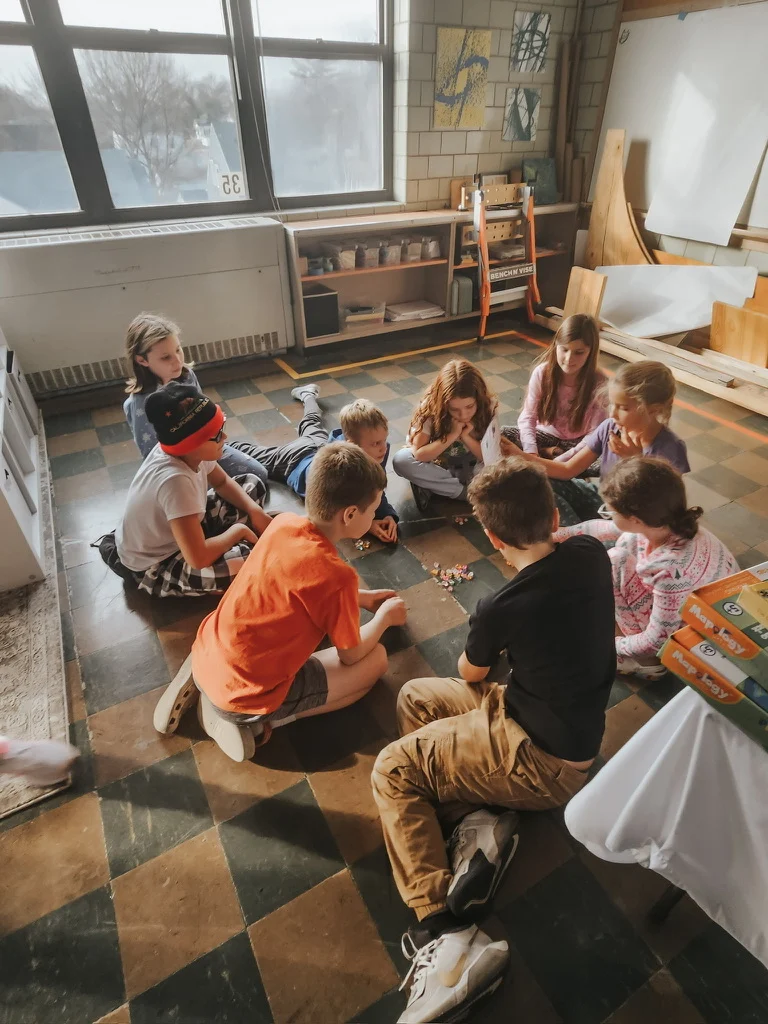
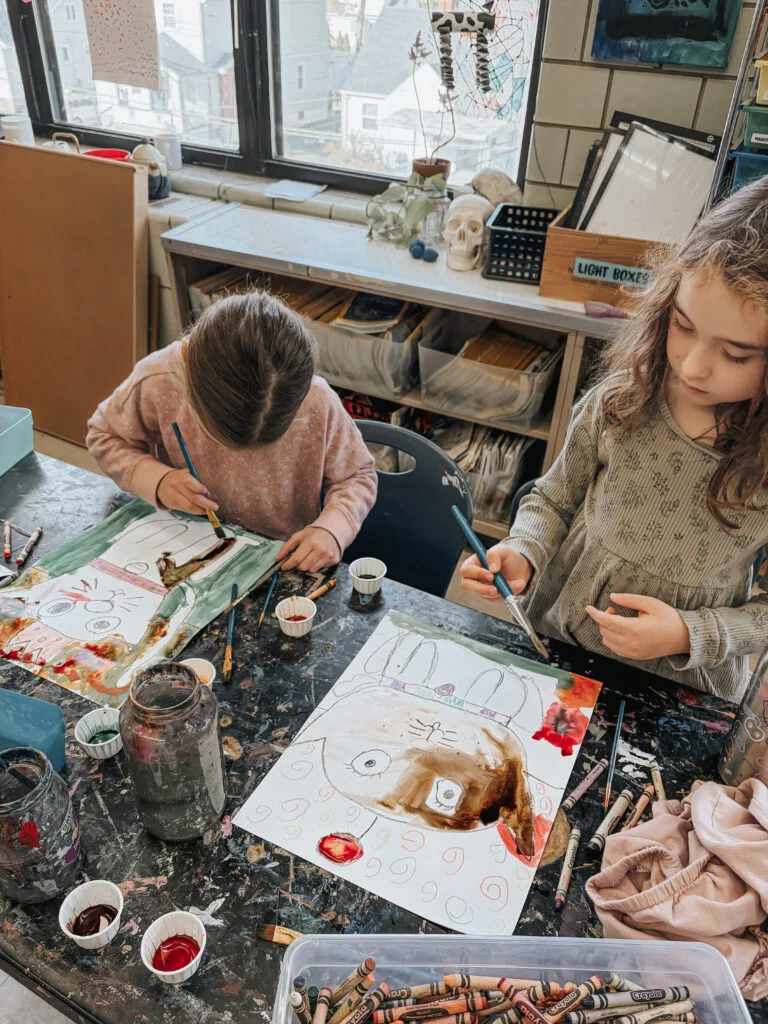
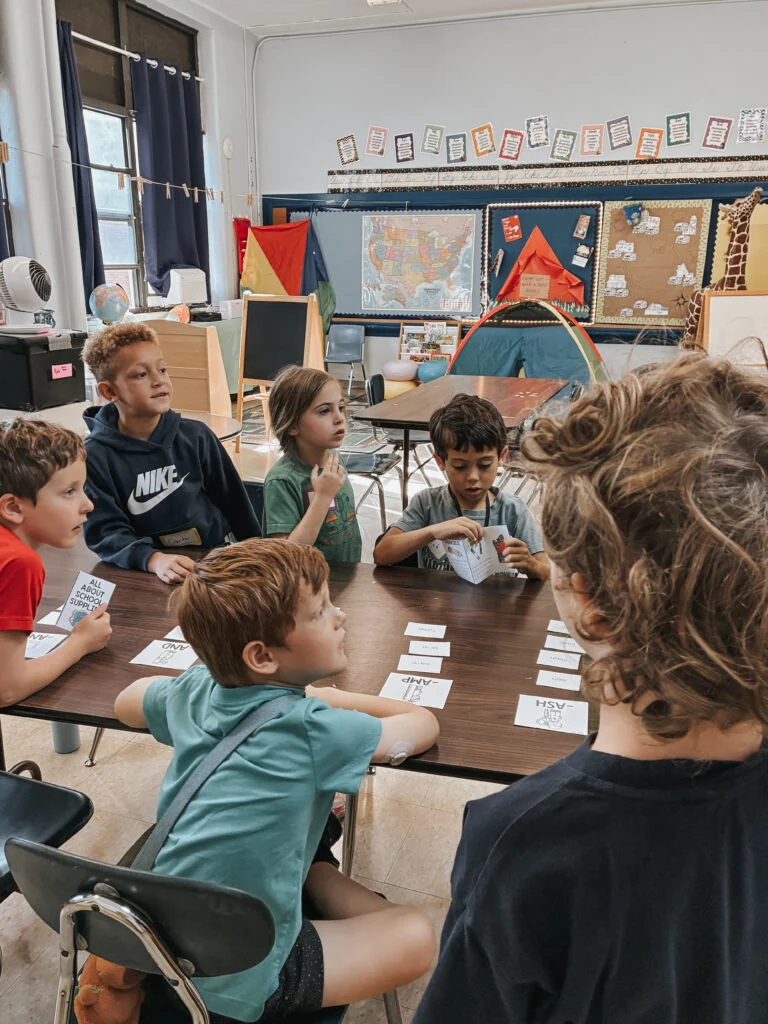
Classes for grades 1–8 are multi-age, creating a family-type, cooperative atmosphere where students feel more confident, take more risks, explore more options, and identify their own gifts.
In multi-age classes, students have opportunities to participate as mentors and leaders to younger students, as well as receive encouragement and guidance from older students. This consistency facilitates growth.
Core Classes
History & Social Studies
History topics are on a four-year rotation, ensuring students cover a wide variety of historical periods and can delve more deeply into advanced concepts as they get older.
History 3/4 & 5/6
- Ancient World History
- Early American History
- Modern American and World History
- Geography
History 6/7 & 7/8
- Ancient World History
- Early American History
- Modern American and World History
- Contemporary American
Social Studies
- Community Builders
- Countries, Cultures & Communities
Language Arts
- Reading & Writing 1/2, 2/3, 3/4, 5/6, 6/7, 7/8
- Literature & Writing 5/6, 6/7, 7/8
Math
- Math 1/2, 2/3, 3/4, 5/6, 6/7
- Math Lab
- Individualized Math – Fractions, Decimals & Percents
- Pre-Algebra
- Algebra I
- Honors Algebra I
Science & STEM
Hands-On Science topics follow the Core Knowledge Sequence on a three-year rotation, giving students in-depth exposure to a variety of science topics.
Hands-On Science 1/2, 2/3, 3/4, 5/6, 6/7, 7/8
- Human Body Systems, Weather, Electricity & Magnetism, Animal Kingdom
- Chemistry, Earth Materials and Processes, Simple Machines/Newton's Laws, Insects
- Astronomy, Light & Sound, Microbiology, Plants, Reptiles/Amphibians
Additional Science
- Geoscience
- Introduction to Physical Science
STEM
- Stories and Challenges
- Mix & Magic
- Exploratorium
- STEM Around The World
- Robotics
Electives
Music & Theater
- Beginning Guitar
- Guitar Ensemble
- Dance Workshop
- Rhythm & Music
- Mini Musical
- Jukebox History/Rock On!
- Beginning Strings Class
- Advanced Strings Class
- Improv Comedy
- Chorus
- Technical Theater
- Musical Theater
Literature & Writing
- Storytelling Through Music
- Young Readers Book Club
- Wordology
- Literature & Writing 13–15
- Journalism
- Basic HS Language Arts
Art
- Art Through The Artist
- Fun with Clay
- Pottery
- Art
- Comics
- Art of Beautiful Handwriting
- The Color of the Month
- Art Independent Study
- Sewing
- Ceramics
- Pottery Studio
- Sculpture/3D Art
- Drawing & Painting
- Photoshop
World Languages
- Latin Through Songs and Chants
- Fun with Spanish
- Introduction to Spanish
- Fun with Italian
- American Sign Language I
- French I
- Spanish I
Science Electives
- Boats, Bridges and Boxes
- Blast Off: A Space Adventure
- Science By The Book
- Science Adventures
- Science Investigators
Practical Life
- Buildin' Stuff DIY
- Take Apart Lab
- Baking Academy
- Photography
- Public Speaking for Beginners
- Food Atlas
- Art of Persuasive Speaking
- The Great LOL Bake-Off
- Culinary Crafting
Physical Education
- Yoga
Games & Enrichment
- Game Day Review
- Think and Build with Legos
- Masterminds
- Modern Day Pioneers
- Little Bakers
- Navigators
- Gameschool
- Puzzlemania
- The Art of Architecture
- PeaceJam Juniors
- Flower Farming & Floristry
- Baking Academy Jr.
- Entertain Your Brain
- Dungeons & Dragons 10–13
- Dungeons & Dragons Level 13+
- PeaceJam Leaders
- Storytelling
- Moviemaking
- Youth Cultures
- World of Design Through Architecture
- American Cinema II
- Mythology I
Frequently Asked Questions
Can my child take just a few classes at Leaves?
Yes! Homeschooling doesn't have to be an all-or-nothing endeavor. While all Leaves families are registered as "homeschoolers," that doesn't mean they do everything at home. For our families, a hybrid program of homeschooling and outside classes offers the best of both worlds: enabling them to set up a personalized education for each child based on individual needs and interests.
Can my child get a complete education at Leaves, similar to a private school?
Yes! Many families rely on Leaves of Learning as a comprehensive educational solution that fulfills all their child's academic needs, much like a private school. Leaves offers academic and enrichment classes Tuesday through Friday. Students in our comprehensive curriculum attend three or four days.
How can my child get everything they need in only three or four days a week?
Small classrooms offer numerous benefits for both students and teachers. With more one-on-one time, teachers can address individual needs more effectively. A small class size fosters better relationships among students and between students and teachers, promoting a cohesive class culture.
With fewer distractions, classrooms can move through material faster, enhancing learning efficiency. Teachers also benefit from reduced stress, allowing for more effective instruction. Research consistently shows that students in smaller classes perform better in all subjects and at all grade levels.
What does the 1/2, 3/4, 5/6 after a class name mean?
Our core classes (science, history, math, language arts) are labeled 1/2, 3/4, 5/6 and so on because these classes should be taken for both grades. Students in a multi-age core class for two years will not repeat topics; they'll revisit concepts the second year at a more advanced level.
Will the same topics/material be covered both years in a multi-age classroom?
No. Students in a multi-age core class for two years will not repeat topics. They'll revisit concepts the second year at a more advanced level, enabling them to learn new skills and hone old ones. Language arts classes will not repeat books over the two-year cycle. Students in math classes work at the level that best meets their ability.
Science and history classes follow a topic rotation cycle. Our multi-age classes enable students to be challenged at their own level through instruction and homework assignments that take into account their abilities and interests.
How do we choose an age group?
For example, a child in 4th grade can choose between 3/4 and 4/5 classes. If your child is in a 3/4 class this year as a 3rd grader and doing well, it would be best to choose a 3/4 class for the upcoming year so your child can participate as a leader on a 4th grade level. There are many advantages to multi-level classes; to fully benefit, the class should be taken for two years.
If your child is working on a more advanced level and wasn't sufficiently challenged this year, it may be best to sign up for the 4/5 level class. We advise parents not to automatically assume their child should be in an older group. A child's emotional and social needs are just as important as academic needs. Our small class sizes usually allow us to challenge most students. We rely on our teachers to make group change recommendations.
What if a class doesn't work out?
We want students to be happy in their classes and recognize that sometimes a class isn't a fit and a change will need to be made. We encourage students to give the class a chance before making a decision. One or two days aren't enough time to tell! Please give the class a chance first (four classes). If a class change is necessary, please contact Diana or Christie by email and explain the reason for the change.
Do students receive "grades"?
Students receive a written evaluation of their work for each class they attend. These evaluations are completed twice a year, once in February and once in June. They include learning objectives for the class and information about how well these objectives were met. Information about class participation, conduct, attendance, and enthusiasm is also included.
Students in academic classes have the option to receive a letter grade in addition to the evaluation. While we hope students are motivated by the intrinsic joy of learning, we recognize that for some students, grades can be a motivator. Allowing a choice enables you to make an individual decision for each child and class.
Ready to explore grades 1–8?
We can help you plan classes and get enrolled.